

Free Webinar: Indoor Air Quality – Separating Fact From Fiction

“Indoor Air Quality: Separating Fact from Fiction”, presented by Scott Lawson, covers issues relating to Indoor Air Quality (IAQ) including common complaints, contaminants and sources, the anatomy of an effective IAQ assessment, and IAQ standards.
The presentation begins with the overall comparison of IAQ issues and their origins. Many IAQ complaints emanate from either real or perceived symptoms and often have little to do with the quality of the indoor environment, never mind air quality. Many companies deal poorly with the investigation of these complaints that, in many cases, only exacerbate the situation, leading to “ghost chasing” scenarios that are very expensive and do little to help evaluate the real problems so that real solutions can be recommended.
The core of the discussion will be regarding a meaningful evaluation of the indoor environment, based largely on occupant input, which has a much greater chance of a successful investigation with satisfying outcomes for both building managers and occupants alike.
Other issues that will be discussed include ways IAQ issues surface; the types of IAQ contaminants, such as mold; mold recognition and sampling styles; how to control IAQ problems; the components of an effective IAQ survey; and more.
Learning Outcomes for this Webinar:
* An understanding of IAQ contaminants and the sources of these contaminants
* Using occupant driven perceptions about the occupied space to determine sampling strategies
* An understanding of how to control/prevent IAQ problems from occurring.
* A comprehension of the systematic approach to identifying and addressing IAQ problems once they occur.
* Exposure to real-life examples that tie all the above learning objectives together
This presentation will begin on October 29, 2009 at 02:00 PM Eastern Daylight Time.

 In keeping with its commitment to protect the lives of children and families, the U.S. Consumer Product Safety Commission is launching “CPSC 2.0,” a comprehensive social networking initiative that will make lifesaving and other safety information more accessible to consumers. Utilizing a variety of technologies and social media sites, CPSC will rapidly expand its reach to millions of consumers.

 OSHA is proposing to modify its existing Hazard Communication Standard (HCS) to conform with the United Nations’ (UN) Globally Harmonized System of Classification and Labeling of Chemicals (GHS). OSHA has made a preliminary determination that the proposed modifications will improve the quality and consistency of information provided to employers and employees regarding chemical hazards and associated protective measures. The Agency anticipates this improved information will enhance the effectiveness of the HCS in ensuring that employees are apprised of the chemical hazards to which they may be exposed, and in reducing the incidence of chemical-related occupational illnesses and injuries.
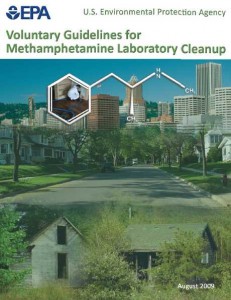 Download HERE:

 Source:
  The Georgia Tech Research Institute is offering FREE one day and one week course regarding the creation of an effective Process Safety Management (PSM) program in accordance with OSHA standard